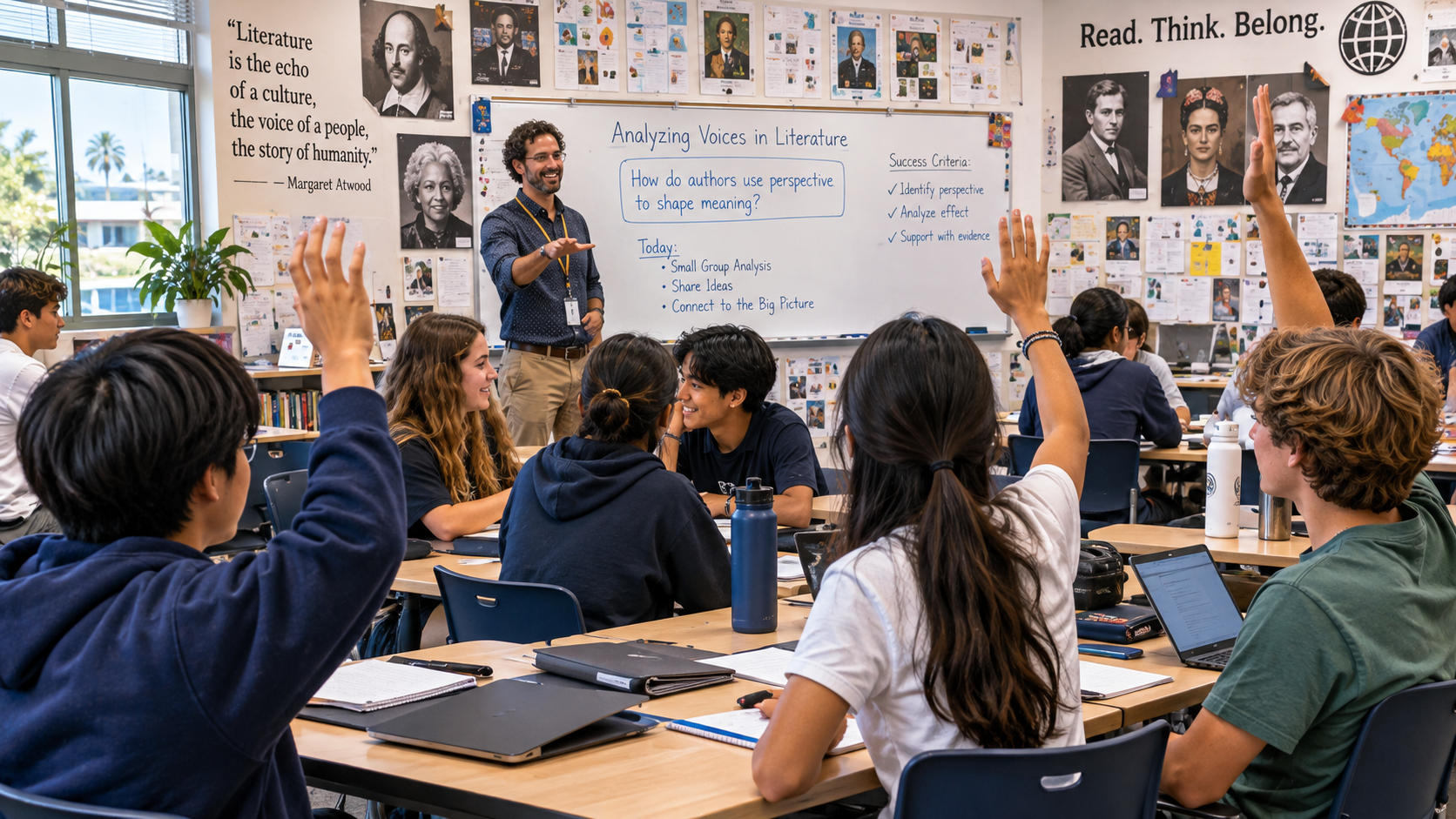
AP Program Development & College Readiness
Every student deserves the opportunity to experience success in a meaningful and rigorous academic environment. Schools that partner with Personalized Rigor have teachers who are well prepared to teach AP courses, students who are well prepared for AP assessments, long-term college-readiness plans aligned with the school's vision, immediate results, and clear steps and structures for sustainable implementation.
Services
Program evaluation and strategic planning
Teacher, coordinator, and leadership development and instructional support
AP participation, access, and student-success strategies
Curriculum alignment and vertical articulation
AP/Honors policies, eligibility, and enrollment systems
Project-Based Learning & Innovative Design
Schools should not have to choose between academic rigor and innovative, student-centered learning. Project-based, personalized, and experiential learning achieve their full potential when thoughtfully integrated with direct instruction and clear learning goals. Schools that partner with Personalized Rigor clearly connect what students need to know and what they are able to do: challenging, standards-aligned learning experiences that build durable and transferable skills.
Services
PBL Training for faculty and leadership
AP and PBL integration around interdisciplinary, standards-aligned projects
Schoolwide professional learning design
UDL-informed individualized learning pathways
Authentic, performance-based assessments
Our Services
AP Program Development
Visioning & Alignment
Determine immediate student-centered goals for AP program
Define the mission and vision of the AP Program upon which policies and protocols can be developed.
Draft an iterative, 5-year plan for AP Program implementation.
Define professional capacity and needs.
Program Architecture
Define requirements for entrance to AP courses.
Define expectations for staying in AP courses and follow through to ensure adherence during school year.
Determine approach to support AP students, teachers, community collectively during 2026-27 SY.
Develop timeline and content for parent communications (beginning of year and enrollment season) as well as enrollment comms plan for students
Develop opportunities to celebrate students' decision to take on the challenge of AP.
Implementation
Align AP faculty and staff to appropriate PD needs and opportunities.
Connect staff to AP support communities and resources
Design mock exam supports and calendar
Design study session supports and calendar
College Board compliance: Design detailed AP calendar to ensure all College Board requirements and deadlines are met for ideal exam administration.
Evaluation
Review program results, faculty feedback, and student outcomes
Provide guided feedback and coaching to staff
Determine priorities for year two and beyond
ENGAGEMENT OPTIONS
Option 1: AP Program Strategic Design
6 months
A strategic engagement that produces the vision, policies, and roadmap.
Best for: Schools that already have AP infrastructure but need strategic direction and a roadmap.
Option 2: AP Program Development & Implementation
12 months
A yearlong partnership that moves from planning into implementation, with ongoing guidance and monitoring.
Best for: Schools building or significantly improving their AP program.
Option 3: AP Program Transformation Partnership
18 months
A deeper institutional engagement involving faculty coaching, curriculum articulation, workshops, observations, and evaluation.
Best for: Schools seeking substantial institutional transformation rather than simply establishing an AP program. Travel costs for site visits are not included in the price structure.
PBL & Innovative Design
Visioning & Alignment
Clarify the school’s goals for rigorous, student-centered learning.
Identify opportunities to connect AP and other rigorous academic courses with project-based and experiential learning.
Assess current curriculum, instructional practices, faculty capacity, and existing initiatives.
Program Architecture
Provide differentiated, gold standard PBL training to ensure readiness.
Design interdisciplinary, standards-aligned projects connected to meaningful driving questions.
Integrate explicit instruction into project-based learning experiences.
Apply Universal Design for Learning (UDL) principles to increase access, engagement, and personalized opportunities to demonstrate learning.
Design performance-based assessments, rubrics, and reflections.
Align curriculum, learning targets, instruction, and assessment across courses or departments.
Implementation
Facilitate project-specific professional learning and tuning protocols that build shared understanding and practical PBL design capacity.
Support teachers as they plan, launch, facilitate, and refine projects in rigorous academic courses.and provide comprehensive feedback.
Connect faculty to relevant resources, exemplars, and professional learning communities.
Evaluation
Review student work, assessment evidence, and faculty feedback.
Identify strengths, implementation challenges, and opportunities to improve access and rigor.
Provide guided feedback and coaching to participating staff.
Establish recommendations for the next implementation cycle.
ENGAGEMENT OPTIONS
Option 1: Instructional Design & Strategic Planning
6 Months
A partnership to evaluate current practices, set a vision for innovation learning, and determine a plan to achieve the schools’ goals.
Best for: Schools ready to explore or establish a coherent approach to project-based and innovative instruction.
Option 2: PBL Development & Implementation
12 Months
A dual-focused engagement providing faculty with differentiated PBL training and ongoing coaching while designing learning systems with leadership.
Best for: Schools seeking to move beyond isolated projects and build faculty capacity for sustained, high-quality implementation.
Option 3: Schoolwide Learning Transformation Partnership
18 Months
A deep partnership that supports vision alignment, provides professional learning, coaches teacher teams, and develops student leadership.
Best for: Schools seeking a coordinated shift in instructional practice and a sustainable, schoolwide approach to deeper learning. Travel costs for site visits are not included in the price structure.
Services
Filters
No results found
No results match your search. Try removing a few filters.
Request a Tailored Proposal
Submit the inquiry form to initiate a detailed discussion regarding objectives and implementation timelines for your institution.